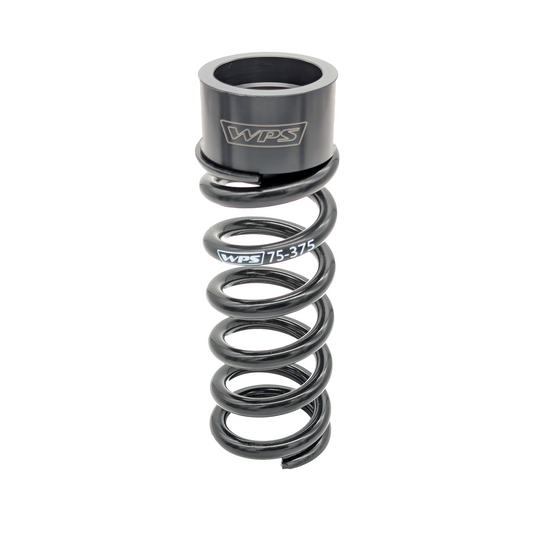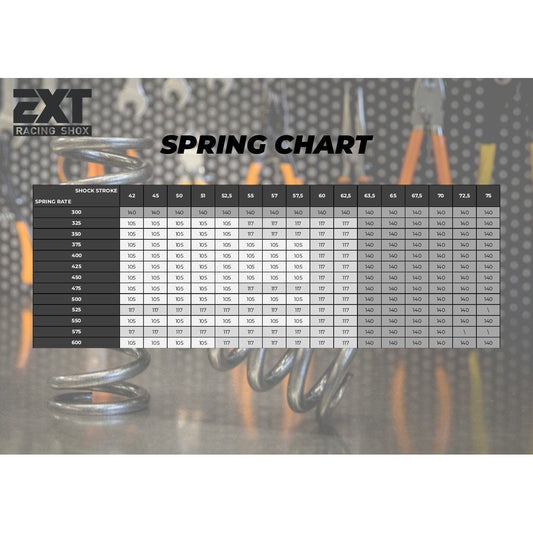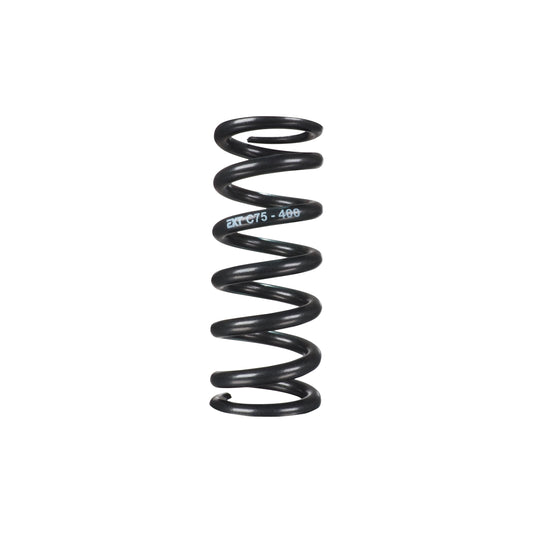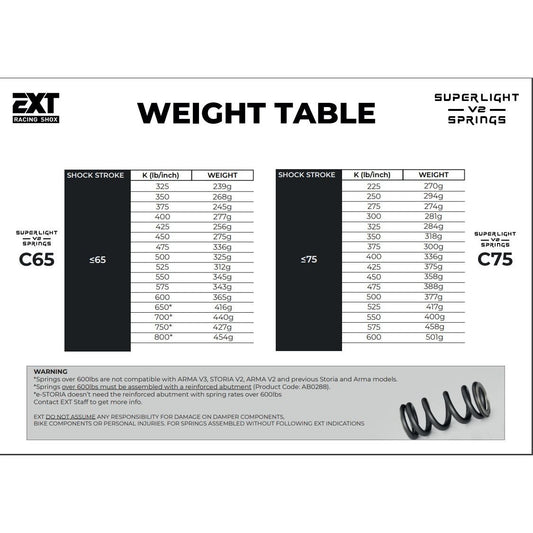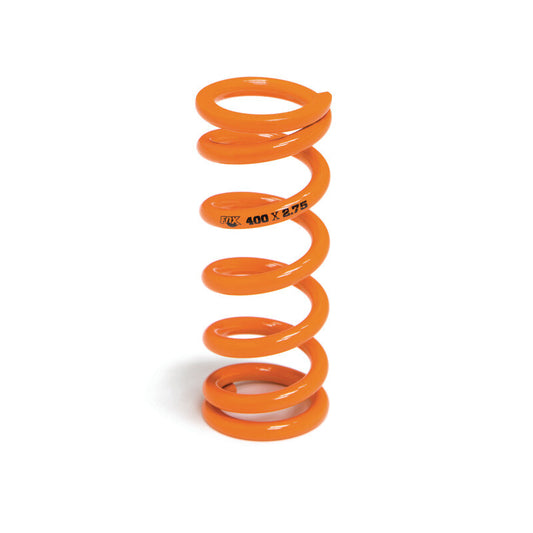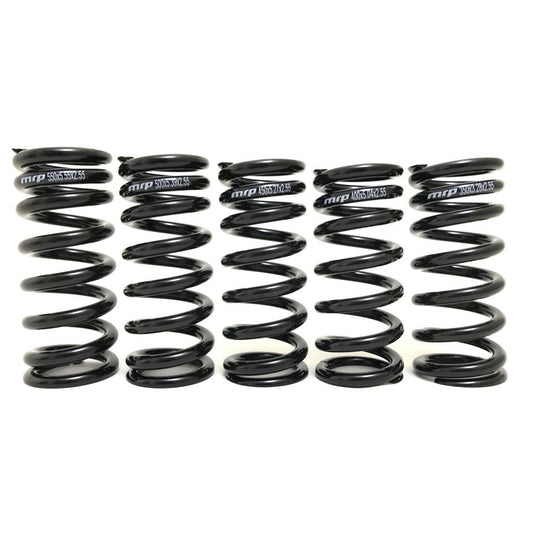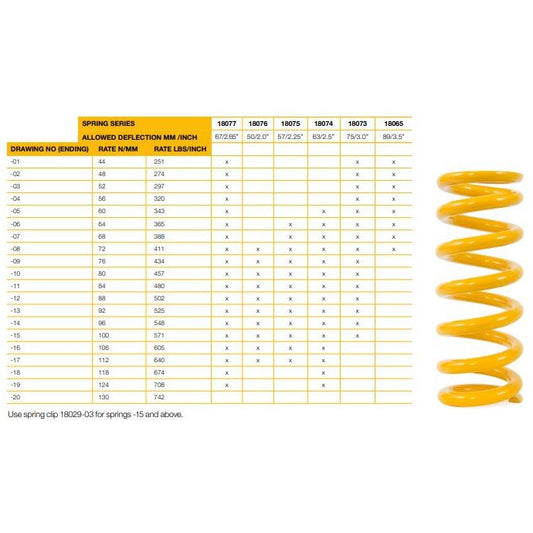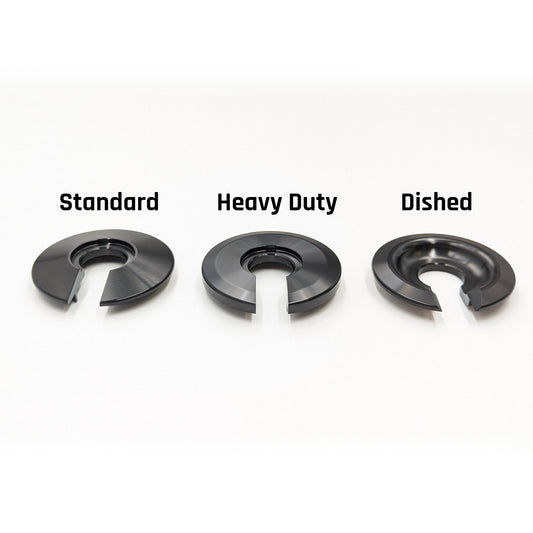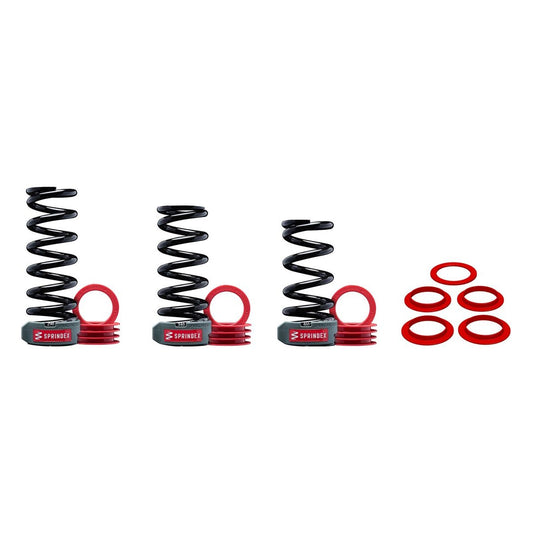

Below is an interactive calculator to help you choose the right spring rate for you.
If you're unsure of any of the sections, please refer to the Key below the calculator.
Please bear in mind that this is an indication for spring rate based on an average riding position - if you tend to load the front more, or the rear more, or if you're a more aggressive, or less aggressive rider, you may want to go either side of the result.
Interactive Spring Calculator
Enter in your details into the GREEN cells to get your result.
If you're unsure of any of the sections, please refer to the Key below the calculator
KEY

Riding Weight
This is your weight with all your riding gear and any pack that you carry on you (not the bike). Enter the value in Kilograms
Bike Weight
This is the total weight of your bike, including any tool kits, spares, water bottles, etc. Enter the value in Kilograms.
Chainstay Length
You can get this from your frame manufacturer's geometry chart (tech specs). Enter the value in millimetres.
Wheelbase
You can get this from your frame manufacturer's geometry chart (tech specs). Enter the value in millimetres
Shock Type
Select your shock from the list.
Shock Stroke
You can get this from your frame manufacturer's geometry chart (tech specs or bike specifications). Enter the value in millimetres.
Leverage Ratio At Sag
- Enter the leverage ratio value of your bike at the sag point you're after.
- Some manufacturers publish this data on their websites, and some will supply it if asked.
- There are a number of bikes posted on Linkage Design's blog (a great resource for free).
Desired Sag
- Enter in the percentage of sag you would like.
- It's best to start with your frame manufacturer's recommendation, but if you have a preferred amount, enter what you would like.
- If you don't know either of the above, as a general rule of thumb:
- XC Trail 28%
- All Mountain/Enduro 30%
- DH 33%
- If you're a more cautious rider, you may want to increase that number, or if you're a more advanced and aggressive rider, you may want to decrease that number.
-
WPS SiCr Springs
Vendor:WPSRegular price £99.99Regular price -
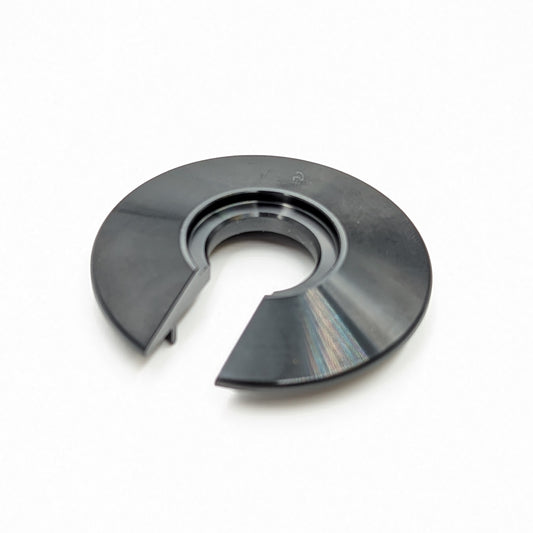
WPS Performance Spring Adapters & Spacers
Vendor:WPSRegular price From £7.49Regular price -
WPS Performance Spring Extenders
Vendor:WPSRegular price From £14.99Regular price -
Cane Creek Progressive VALT Spring
Vendor:Cane CreekRegular price £99.99Regular price -
Cane Creek VALT Spring
Vendor:Cane CreekRegular price £79.99Regular price -
EXT Springs V1
Vendor:EXTRegular price From £95.00Regular price -
EXT Superlight V2 Springs
Vendor:EXTRegular price £120.00Regular price -
Fox SLS Spring
Vendor:Fox Racing ShoxRegular price £159.95Regular price -
Fox Steel Spring
Vendor:Fox Racing ShoxRegular price £46.95Regular price -
MRP Enduro SL Progressive Spring
Vendor:MRPRegular price £129.99Regular price -
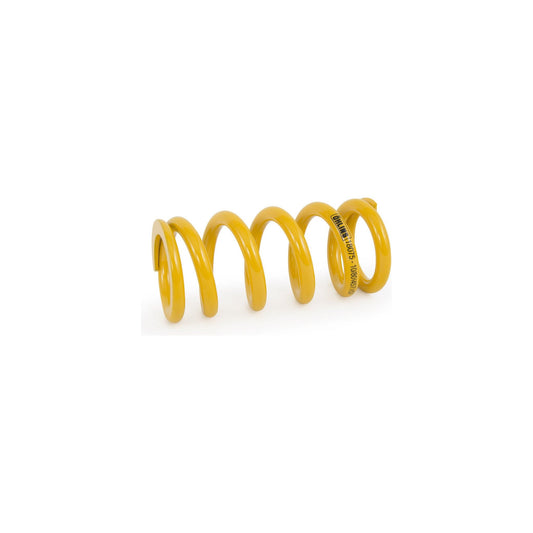
Öhlins Rear Shock Spring Lightweight
Vendor:OhlinsRegular price £122.00Regular price -
Öhlins Spring Clips - Standard/HD/Dished
Vendor:OhlinsRegular price From £17.00Regular price -
Öhlins Rear Shock Spring 89mm Stroke
Vendor:OhlinsRegular price £71.82Regular price -
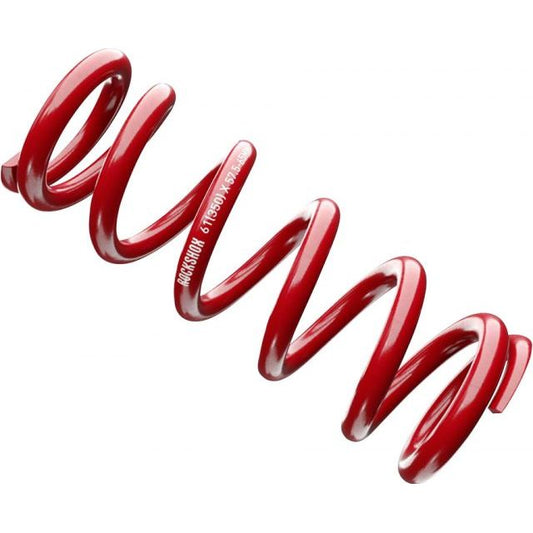
Rockshox Metric Coil Spring
Vendor:RockShoxRegular price £40.00Regular price -
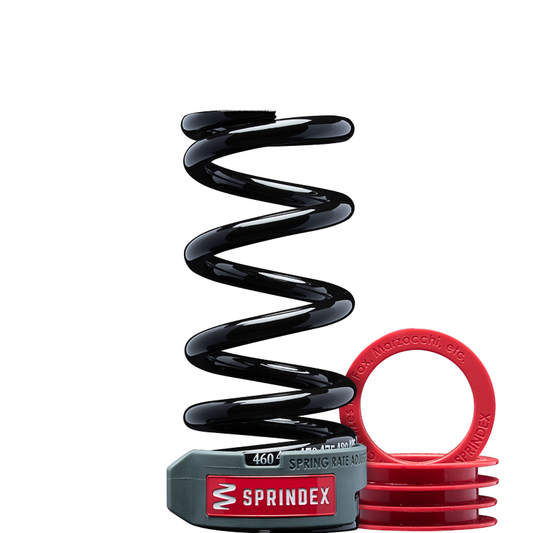
Sprindex Springs - Adjustable Spring Rate
Vendor:SprindexRegular price £125.00Regular price -
Fox SLS Spring Black
Vendor:Fox Racing ShoxRegular price £159.95Regular price